Prev 1 2 Next
WHY SET A BOSNIA NOVEL IN PARIS?

WHY SET A BOSNIA NOVEL IN PARIS?

When I started writing This He Did Without Remorse several people asked me why I’d chosen to set it in Paris.  Since much of the plot turns on the fallout from events which happened in Bosnia, wouldn’t Sarajevo have been a more obvious choice of location?  Perhaps.  Except the book isn’t really about Bosnia, it’s [...]

Continue Reading

NOVEL LOCATIONS IN PARIS

NOVEL LOCATIONS IN PARIS

One way of saying photo, or snap, in French, is cliché. Can there be a more apt Paris cliché than taking a photo of the Eiffel Tower? Even though the tower hardly appears in the novel, I couldn’t help myself. It just had to be done. Writing a novel is all about choices. What to [...]

Continue Reading

Blog

Filmpoem 31 /After the Robins by Alastair Cook

I saw this going past on Facebook, and wanted to share it here. It’s a short film inspired by the tremendous poem ‘After the Robins‘ by Angela Readman. The reading is by Gérard Rudolf, and the music by yvonnelyonmusic.com.

I was completely drawn in by the atmosphere, and tremendous sense of unease, created by the opposition of words and images. Another tour de force from the endlessly creative and inspirational Alastair Cook.

Filmpoem 31/ After the Robins from Alastair Cook on Vimeo.

Botched Cranachan Cake


ImageI’ve not baked anything for a few months now as I have mainly had my head down writing.  But as we were having an impromptu delayed Burns Night with a few friends on Sunday night, I decided to attempt something Cranachan themed, but with strawberries instead of raspberries.  I remembered then that I had once tried a fantastic Strawberry Meringue Buttercream recipe from Martha Stewart, and decided why not try a fusion of Victoria sponge and cranachan?   To make the cake you see here, I doubled Rachel Allen’s Victoria Sponge recipe and divided it between three 23 cm cake tins.  Then I layered the sponges with some strawberry jam, and ‘cranachan’ cream, which I made by whipping up a carton of double cream with a few good glugs of Oban Whisky through it (I chose this because it’s not terribly peaty, so it wouldn’t overpower the sponge and jam) , and a few generous handfuls of rolled oats I had toasted in a dry frying pan.  By this point, the whole thing was a teetering monster.  I then covered it with Martha’s strawberry buttercream icing, and scattered some of the remaining toasted oats over the top.
Overall, I was pleased with the appearance of the cake, and of the flavours.  However, as you can see from the second photo, the bake I got on the sponges wasn’t terribly even.  To my horror, my first thought when cutting in was that it seemed raw.  Never ideal when there are eight photographers sitting around the table helpfully taking photos.  But one of them bravely Image 1tasted it and confirmed it actually tasted cooked, although it was deemed a bit ‘heavy’.  On the plus side, I thought the combination of strawberry jam and cranachan cream worked well, and having toasted oats through the filling, and scattered over the icing really helped cut the sweetness.
So all in all, one I would definitely make again, but perhaps with a rethink on the sponge front.  I’m still not sure where I went wrong, as must have made dozens of sponges over the years and have never had a problem.  Perhaps it was the fact of having neglected my cake tins for so long?   Why should baking be any different from anything else in life?
I’d love to hear what you’ve been baking of late.  All recipes, tips and inspiration gratefully received (especially for easy, no fail recipes!)

On having my portrait taken by Tony Richards

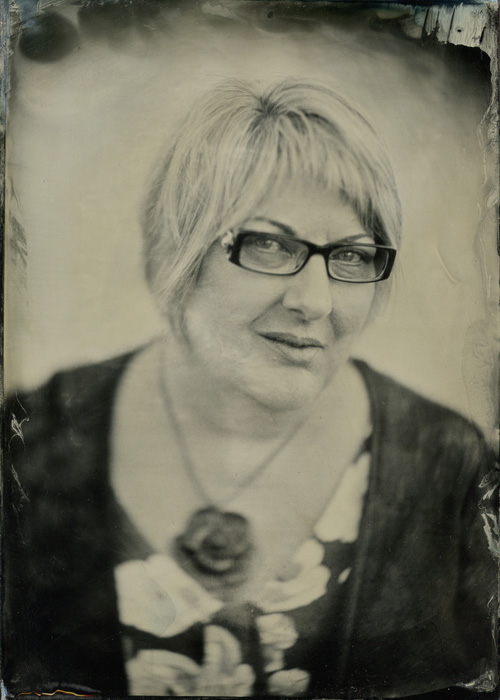
Melanie-ByTony-MediumI get my picture taken a lot. On a bad day, this can mean dozens of times.  The reason?  Usually, it’s because I am ‘there’; standing around on the set of a shoot my husband is setting up, and therefore a sitting duck for any other photographer who happens to have their camera in hand and wants to just ‘check the light’ and what it is doing to skin tones. 
Until recently (like ten days ago) I absolutely hated having my picture taken.  Then, last Sunday, I was standing around on an outside location shoot at which a group of photographers had turned up to help (it’s has been my experience that photographers travel in packs, or herds even).  Elizabeth Molineux was on hand, ‘testing’ a camera she had borrowed for a particular job she was doing later in the week.  This ‘testing’ involved picking people off from the herd one-by-one, and holding her lens a few millimetres from their faces.  I heard her clicking, so close it was like she had climbed into my ear, and turned to look at her down the barrel of the lens.  So, not just a close up, but an extreme close up, AND she was using that Kalashnikov setting that takes 200 frames per second.  Ordinarily, this sort of thing really winds me up.  But looking at her, I had a sort of epiphany, and instead of doing my usual thing of cringing and thinking, can you not just give it a rest with that bloody thing, this time I just stood still and watched Elizabeth.  I watched Elizabeth doing her thing and made a critical leap.  It wasn’t about me, it was about Elizabeth.  She was doing her thing, and I just happened to be in her light.  After a moment or two, her head popped out from behind the camera and she said, ‘Wow!  You’re really amenable today.’  I knew then that something really important had changed, that I had just experienced my own little moment décisif, if you will.IMG_0530  Fortunately, I remembered to pack this Whole New Mindset when we headed off to Veldhoven in the Netherlands for the European Collodion Weekend.  Because there, I had the great pleasure (yes, pleasure!) of having my photo taken by Tony Richards, a wet-plate photographer from the North of England, who excels at portraits, and was exhibiting his work at Veldhoven. This time, it was not a question of just happening to be standing in the wrong place when he wanted to check the light, but rather, actually stopping what we were doing and sitting down in his pop-up studio so he could take the shot.
Although I had never met Tony in person until this weekend, he is someone I have collaborated with online.  So it was lovely to finally have the time to just sit still and watch him at work.  As he prepared the plate to slot into his magnificent camera with its Petzval lens, it suddenly hit me. This is the real portrait:  The way he takes such enormous care over all the myriad details which go into a making a unique wet-plate image. Except, through some trick of the light, instead of seeing Tony on the glass at the end, it has ended up looking more like me.  Or perhaps, it is Tony’s version of me.  The ‘me’ he coaxed onto the glass by telling me where to look, and what to think of while the lens cap was off (sorry, since this is a family site, I can’t share tell you what it was…)

Afterwards,Tony asked if I wanted to come into the tent he was using as a mobile dark room to see the plate come to life. Obviously, I jumped at the chance and – buoyed up by the short-film I had made the previous day in another photographer’s dark-tent – I asked if I could film the plate IMG_0531appearing in  the developing tray.  He said yes, and zipped the flap of the tent shut.  Fumbling around in the pitch dark, I turned on the video camera and a big light came on. The sort of light you might use if you wanted to melt the world.  Anyway, we both jumped and ran around the tent panicking a bit, and then I managed to get it switched off again.  As you can imagine, I felt sick with embarrassment at having just ruined his plate.  But Tony just laughed and told me if it didn’t work, we’d do it again.  But do you know what?  Despite my best efforts to destroy it, the plate worked.   So here you have it.  A portrait of someone who was lucky enough to get the best seat in the house for watching Tony Richards at work.

(In the image on the left here, you can see Tony showing members of the public who attended the European Collodion Weekend how he gently uses cotton wool on the plate to simply daub away any unwanted artefacts from the wet-plate collodion process.)


My YouTube debut, or, ‘Three men in a tent…(Borut, Gordon & Gerald)’

When, in late December of 2012, I decided that 2013 would by my year of thinking more consciously about creativity in all its many forms; how it inspires us and drives us onwards, I was not really expecting to wind up in a three-man tent (which doubles as a portable dark room), in a campsite I’d never heard of in the Netherlands, watching a Slovenian photographer I’d never met before, make a negative collodion wet plate of a man he, and many like him around the world, call ‘the Head Bastard’.   But today, for once, all those years of making New Year’s Resolutions finally paid off.
The Slovenian photographer in question is none other than internationally renowned Borut Peterlin, and the head shot of the ‘Bastard’ he was making a negative of belongs to the American photographer Gerald Figal, who has a rapidly growing global following of his own.  The reason these two jokingly refer to each other as bastards is because, on the side, they practice photographic techniques of their own making, which many consider to be of ‘questionable parentage’.  (You can read more about this in Gerald’s own words here.)
Part of my own adventures in creativity have stretched to a sudden impulsive decision to start videoing various aspects of my life just to see what happens.  So here, without further ado, is my YouTube debut, with heartfelt thanks to Borut Peterlin, Gerald Figal, and as ever, Gordon Fraser.  A nicer bunch of bastards no one could ever wish to meet.


You get what you give. World Book Night 2013.

IMG_0353 Some months ago, I clicked on a link via Twitter and applied to be a ‘giver’ for World Book Night 2013.  One of the lucky souls who might have the honour of giving away FREE books.   From memory, I had to fill in an online application, giving some idea of where I would like to give the books away and why.  My immediate thought was our local A&E department.  Until a few months ago I’d spent a few years as a full-time carer for an elderly relative who not only has Alzheimer’s, but several other serious medical problems.  I have lost count of how many times we have been rushed to A&E by ambulance in the past four years, but it is certainly in double figures.  The first few times are a blur.  You aren’t thinking of yourself, so you forget that you have pulled a dress on over your pyjama bottoms and then forgot to switch to tights, or that you had moved everything across to your other handbag, so that the one you’re carrying is empty.  Of course, nothing could matter less.   It’s been my constant experience of the NHS that wherever you pitch up, if you, or a loved one, are in a genuine crisis, everyone there will be fantastic to you.  I have been through perhaps twenty crisis-admissions in the past few years, both in England and in Scotland, and this much I know:  the NHS is superb in a crisis, and as you read this, there are people going above and beyond in ways you can’t begin to imagine until you see it.  Plus, there are the other patients and relatives, the ones who just happened to be there at the time your loved one very nearly just died…again.  The people who let you use their phones, lend you money for the machines even though they’ll never see you again, magic up spare tights (seriously).  It’s been my experience that anything you need, someone will try to come up with.  Except books.  When you have hours and hours of waiting ahead of you, and were too rattled by unfolding events to think about grabbing something decent to read, you’re on your own.  It’s one of the main reasons I initially bought a Kindle.  So it could live in my bag and, now, when I am called out in the night, it can still feel like the end of the world…again.  But at least I always have something decent to read as I listen to the rhythm of those monitors.

So when I filled in the form all those months ago, I said that what I would really love to be able to do is turn up in A&E for a positive reason for a change.  I’d like to be calm, uplifted, and wander my way through the well-trodden admissions route and look for people who needed a decent book to get them through the hours and hours and hours and hours which lay ahead.  My first choice was to be able to give away The Reader by Bernhard Schlink.  I loved this book, and I knew it would have been a great relief to me on more than one occasion if I had had it to keep my company next to the bleeps in the dark.   So you can imagine how delighted I was to learn that this was the title I had been chosen to give out.

By the time the box of books arrived, I had a few reservations about my plan.  I decided that I would not retrace the exact route we have been through when admitted as a trauma case.  Instead, I started in the general A&E waiting area.Image 1  I set down my bag of books and just began speaking to everyone at once.  My husband (who took the photos) had predicted this would not go well, fearing people would take me for a religious nut, or some sort of con artist.  But to my delight, several normal looking people immediately chimed in saying they’d heard about it.  In particular, they loved the fact that it was happening on Shakespeare’s 449th.  Not everyone wanted a book, and one very drunk lad momentarily thought I was trying to tell everyone his story (you know, about that time when he was a teenager in post-war Germany and had an affair with that older woman who turned out to be a war criminal).  Anyway, he snatched a copy of the book from my hand, and I have to confess that a part of me did want to grab it straight back, since I doubted he would read it, but I then decided this would hardly be in the spirit of the event, and moved on.  The next person I met was a recent émigrée from the Czech Republic who felt her English wasn’t quite up to reading the book.  Aha, I thought…she’s perfect. I cajoled her into at least opening the book and trying a few sentences, but she decided it would be too difficult for her, so we agreed to meet up again same time next year. 

From there I followed the admissions route to the Medical Assessment Unit.  In my experience, this is a no-nonsense place and I expected to be thrown out if I approached any patients without permission.  So I went to the main desk and started my pitch for the staff, explaining that I had chosen this place Imagebecause of my mother-in-law.  I recognised several members of staff, and a few very gratefully took me up on books. Since no one objected to my presence, I went to the family room and found a few shaken looking folk.  By the look of them, I’d say they’d been there for a few hours.  I had three very subdued takers, and a few people who just shook their heads no. 

By now I was surprised to find I was already running low on stock.  A nurse approached me and said that she’d overheard me talking and would like to give a copy of the book to her twin to read.  I happily handed it over, and this left me with only five books left.  I decided to start being a bit more selective about who to approach. When I got near the cafe, I spotted a woman who seemed distressed, busy sending a text.  I went to stand near her, but she didn’t look up.  I could see she’d been crying, and that she was very pointedly ignoring me, and I am not sure why, but I had this very strong sense that I should just wait her out.  Eventually she looked up, annoyed, asked me, ‘What is it you want?’  I said that I wanted to give her a book as part of World Book Night.  Her attitude immediately softened.  She’d heard all about it but didn’t realise it was happening ‘here’.   She told me that she had been there all day, waiting for news, and that she was a bit all over the place.  I told her why I had chosen the hospital, and then I talked a bit about why I loved the book.  I could see her getting calmer, and she was very happy to have the book as she knew she was in for a long night, and it had been ages since she’d read anything good.  I was aware of an older man opposite us who had heard the conversation, and I was anxious to move on to catch him before he got up.  But suddenly it felt like the first woman really wanted to talk. She started asking me about the other books on the list, and how I’d got involved.  Then she thanked me so profusely I began to feel embarrassed since really it had very little to do with me.  I was just the final link in this enormous logistical chain, and in many ways, I was the one who should have been thanking her.  There have been so many times in the past few years where I have been sat in the same row of seats she was in, the obvious nervous wreck trying to hold it together in public, who suddenly found myself on the receiving end of some random act of kindness.  But tonight, thanks to Bernhard Schlink, and Orion Publishing Group, and everyone at World Book Night, instead of being the potential human puddle in the corner, I got to be the random act of kindness.  Twenty times over.   And now there are twenty people I’ll never see again, out there somewhere, with this fantastic book ahead of them.  Or maybe they’ve even halfway through it by now.  If they love it even a fraction as much as I did, they are in for a real treat.  What could be more wonderful than that?

‘The Sober Scent of Paper’ by the Leisure Society


Here’s a link to a rather wonderful free download that I’ve fallen in love with and cannot share fast enough….  I discovered it courtesy of @FaberSocial.  They also have a truly splendid website, where you can can read more about how songwriter Nick Hemming set out to capture the essence of Sylvia Plate in song lyrics.

Fab short film about wet-plate photography by Alex Sapienza of The Analogue Studio, Dublin

Warning: If you watch this, you will feel a deep need to fly to Dublin to have your portrait taken…

Twenty three minutes with Sylvia Plath

If you have been completely cut off from all news and media sources for the last month, you may have missed some surprising news.  Or, at least, it surprised me.  The Bell Jar turned fifty this year.  It was a shock, since I was sure it was from the 60s, which was like twenty five years ago.  But not so.

For many female writers who came next, the ghost of Sylvia Plath has always loomed large.  Lately, I feel as though she is everywhere I turn.  Even this morning, as I was waiting to wave someone away in our drive, I absently switched on the radio on the windowsill and just happened to catch Hayley Atwell reading from Andrew Wilson’s new Plath biography Mad Girl’s Love Song.  I hadn’t realised this was the BBC book of the week, although, had I stopped for one minute to consider what it might be, I would have had to guess this, or the Bell Jar itself.  (I will search the schedule in a minute, it must surely be there, or on BBC4.)  After all, Sylvia and her infectious, feminine, feminist madness is everywhere at the moment.

Which is, in my view, a good thing.  For hers is a voice of which I simply never tire.  A voice I thought I had quite a good sense of by now.  But then yesterday, I had the unexpected pleasure of hearing it for the first time, not in the short, time-capsule clips I am accumstomed to; in which she is dolled out one poem at a time, but rather at meandering length. 

lady lazarus2The extraordinary Arts site, the Space, currently has an astonishing short Plath film made my Sandra Lahine in 1991.  It’s called Lady Lazarus, and is a deft and confronting montage of Plath imagery, set to the poet’s own voice, either reading her own work, or taken from interviews.   It’s not an easy thing to watch but, if you are even remotely interested in Sylvia Plath to begin with, this will have you flying back to the Bell Jar and Ariel.

There is something both chilling and uplifting about hearing Plath’s voice over a longer spell.  It’s from its time, obviously, and so slightly strange.  But what really resonates is the vivacity.  There is such vivacity at work here, that these echoes of an extraordinary mind only raise more questions about her mortal obsessions.

I read about this film in the Guardian but if you click on the image, it will take you where the film is currently screening on The Space.org.  


Yesterday, I took my first ever gas mask photo…

IMG_6234If you’ve been reading this blog, then you will know that one of my goals for 2013 is to try and think a little differently about creative expression.  As part of this process, I have managed to be become the embedded writer in an astonishing project involving more than that 100+ wet plate photographers from more than 25 countries.  It’s called ‘The Mask Series‘ and the idea is quite simple.  Everyone involved takes one image, using a wet plate camera like the one you see here.  In other words, no film. Instead, you mix up the chemicals needed to make your chosen surface (glass, tin, aluminium) photosensitive, and then, provided you haven’t blown yourself up yet, you take a photo that has a vintage M10 Czech Gas Mask in it.  (This does actually make a lot more sense if you look at the blog devoted to the project.)

Since I am writing so much about this project now, I decided it was about time I took a gas mask image of my own.  The only problem is that I can’t take a wet plate collodion photograph.  Or rather, I suppose could, by cheating a bit.  I’m sure, if I asked him nicely, my husband would mix the chemicals, and set up the plates, and help me work out all the lighting issues, and the exposure time.  And, since I am on crutches, I’ll bet he’d even do all the esoteric running back and forth in a butcher’s aprons and CSI gloves to the ‘darkroom’ (aka, our downstairs loo). 

I know he would do that for me.  But it just wouldn’t feel right somehow. Because even in the short time I have spent writing about the wet plate collodion community, I have developed a very healthy respect for the tremendous skill levels involved.  So deep down, I knew that taking short-cuts here just wouldn’t be right.  But since I am writing so much about the images that others are taking, I felt I should at least think about what sort of image I would take if I was in possession of the necessary skills.

I was surprised to find it wasn’t something I needed to think about for very long. If anything, it felt as though the answer been ready the whole time, lying in wait for the question.  If I am going to ‘make’ an image, one that is consciously chosen as an artistic expression, then it has to be of my husband.

This was an epiphany of sorts.  Exactly the sort of thing I was hoping to discover when I decided to try thinking more consciously about creativity.  Who knew the visual-me and the scribbling-me would be preoccupied with completely different subjects?

In my fiction, I am mainly drawn to loss, sorrow, and the ways in which we do, or don’t, recover from violent incidents in our lives.   So it’s perhaps not surprising that my husband doesn’t tend to feature very heavily (or, indeed, at all) in what I write.   And yet if I’m going to be staring down the barrel of a camera, then he is instinctively what I want to take a closer look at.  (In fact, to my horror, I’m beginning to wonder if, as a photographer, I might actually border on the whimsical.) 

Why should the medium have such a transformational impact on, not just the creative impulse, but also the tone of the output?  I’ve got a call into Messrs. Freud und Jung about this, and will update you if I hear more…Image

Meanwhile back in my Christopher Isherwood moment, I started thinking about how I would reconcile these two radically different ideas [Gordon + Gas Mask].  The first big problem was that I don’t want to think about Gordon ever needing a gas mask.  His breathing is already fragile enough, because of asthma, and there have been too many times when I have been awake in the night listening to this rasping vulnerability, and trying banish thoughts of how quickly it could all go wrong.  In these moments I think of the staggering poem by Margaret Atwood  Variations on the Word “Sleep”.

I would like to be the air
 that inhabits you for a moment
 only. I would like to be that unnoticed
& that necessary.

By now I was starting to feel a bit defeated about conveying all of this to the viewer in one image.  Plus, even as I prepare to tell Gordon about this idea, which I am quietly confident he is going to hate, in the back of my mind there is another angsty question brewing.  Do I really want to be the first one to bring a camera into our bedroom?

So, both emotionally and creatively, there was a fair bit going on before I even got to the part about not being able to work the camera.

The more I write about this, the more the very act of doing so, i.e. writing about my planned image, feeling the need to justify it, and/or apologise in advance for its shortcomings, strikes me as still more evidence that I am not one of nature’s born conceptual artists.  For if there is one thing I have noticed about photographers, it’s that they tend not to bang on endlessly about their images unless there are writers standing around pestering them for details.  So this entire exercise is starting to feel like big flashing clue that when I do actually take the bloody shot, the result won’t be worth its thousand words.

A little while later

You’ll be relieved to hear, it’s done now. My ‘what might have been’ attempt at contributing to the Mask Series. Unapologetically taken with my iPhone.  (Although, Gordo has promised there will be a Collodion Bastardised version coming soon…)

And if you’ve read this far, you might just be interested in seeing it…

MGF gas mask photo iphone


Here it is…a photo of my husband, pretending to sleep with a vintage Czech gas mask on. 

I call it, ‘Gordo, pretending to sleep while wearing a vintage Czech gas mask‘.

William Boyd’s short story ‘The Ghost of a Bird’ re-imagined as ‘Patient 39′

In January, I decided that 2013 should be my year of thinking about creativity.  What inspires it? What drives it?  How can we tap in and harness it to enrich our lives?  So I was very grateful when the producer Roland Holmes got in touch offering to let me have a Behind the Scenes chat with Director,Image 3 Dan Clifton  of Atomium films, who are in pre-production for an exciting new film adaptation of William Boyd’s short story ‘The Ghost of a Bird’.

Without wishing to risk any spoilers, Boyd’s story tells of Patient 39, a young British soldier who has had his memory severely impaired as a result of a head trauma sustained in combat, outside Caen in Normandy, on June 12, 1944.  

When Roland first got in touch about the project, it intrigued me on several levels.  The first, is that anything with the words ‘William Boyd’ in it is a guaranteed temptation, as he has long been one of my favourite authors.  Similarly, having lived in Caen for a few years, reading it there in black and white always catches my heart out.  And, the thought of coming to terms with traumatic memory loss is particularly poignant to me at the moment.  For the past few years I have been caring for an elderly relative who has been gradually disappearing into profound Alzheimer’s, and for whom, as Boyd says of Patient 39, ‘life has become an endless series of labyrinths.’ 

Although I had read Fascination some years ago, I had only the vaguest memory of ‘The Ghost of a Bird’ – no irony intended.  Re-reading it, I was now able to recognise just how brilliant a representation of interacting with someone whose memory is in tatters it really is.  If I have learned anything from living with Alzheimer’s, it’s that ultimately, we are all a collection of anecdotes – either of the things we can recall, or the stories we tell ourselves. So that recurring themes and phrases, once emblematic underpinnings of our ideas of self, can so easily end up floating around inside our heads junk code, like the agonising phrase in this story, Je t’aime pour toujours, Sylvie.  I’ll always love you, Sylvie.  (Even if I no longer know quite who, or where you are.)

It’s fair to say as I watched the short teaser Director Dan Clifton made for the film, I was already persuaded this was a project I would want to know more about. 

Take a quick look now yourself, and I am sure you will feel the same.


Patient 39 Fundraiser from Dan Clifton on Vimeo.

MG: Starting with the most obvious thing I could think of, what made you choose ‘The Ghosts of a Bird’ to adapt? 

DAN CLIFTON: I came across the story almost by chance, not actively looking for something to film.  I always really enjoy William Boyd anyway, and happened to pick Fascination [+link to book] up in the library.   While reading ‘The Ghost of a Bird’ there was just something about this story, and the enigma of soldier with memory loss, that I found very interesting for several of reasons.  The first was that it felt quite cinematic.  The images in it are very strong, and I was quite drawn by that.  There was something very clear about it.  But more than this, like many William Boyd stories, it takes the form of a diary, and has a quiet, scientific tone, and I am very interested in these sorts of  stories, and characters.  It is very much this interest in scientists, and their outlooks, which informs not only Patient 39, but also an earlier film I made, called The Calculus of Love and which starred Keith Allen.  I’ve made a few documentary films about scientists and I am very interested in where the scientific imperative comes into conflict with human values.  

MG: That was something which really comes through with Keith Allen’s character in ‘The Calculus of Love’.  The way he is utterly obsessed with his own research, but how ultimately it’s this obsession which ultimately destroyed him and everyone around him.

DAN CLIFTON: Yes, well it seems to me we live in this culture which is completely colonised by the scientific view of things and yet somehow we know it doesn’t always quite measure up. So part of my interest in adapting ‘The Ghost of a Bird’ really went from there as well, and so I approached his agent about getting the rights.

MG: Is it difficult to get the rights to do this sort of thing?

Dan Clifton

Dan Clifton

DAN CLIFTON: It took a bit of persuading.  But in our case, Boyd himself is a film-maker, and a writer and has spoken about the need to give breaks to short-story writers, so, (laughs) although I have not had any direct communication with him I feel his benign hand behind it.  What I would say to other people in this position is if you don’t ask, you don’t get. 

MG: So how far into the process are you?  Have you got a script and a storyboard? 

DAN CLIFTON: I started working on it last year, thinking about how I would go about it not just in terms of the ideas, but also how I would make the film.  And by make the film, I actually mean fund the film.  At the moment we have a fairly well-developed draft.  The film-script is, of course, necessarily different than the short-story, but it also takes the form, at least initially, of the case notes of the doctor.  But then, like the short story, it transitions to something a bit more personal, and the scientific tone changes as the relationship develops between the doctor and the patient.

MG: Something which fascinated me in reading the story was the question of whose point-of-view you would stick with.  In the ‘The Ghost of a Bird’ William Boyd sticks squarely in the POV of Doctor Moran, but I wondered if in retitling it as PATIENT 39 you were giving us an inkling that maybe we’d also see things from Gerald’s inner landscape? 

DAN CLIFTON: That’s something I did wrestle with, because the narrative is quite driven by this enigma of who Patient 39 is, and this draws you into the world of the film and the story. This did, in some ways, shift things away from Dr Moran, but I am very clear this is the doctor’s story. In the context of a short film you are always looking for a pivotal moment, or change, and the focus in this story I hope is how Dr Moran is changed by his relationship with Gerald Gault, or Patient 39, as we call him. For me, the interesting thing is that we see it all through Moran’s eyes, and how he meets this young man who, unlike him, is not a scientist, but a man who lives in his imagination, with a great sense of beauty and of nature, and who, because of his injury, lives in the moment.  Moran, on the other hand, has never really seen the world this way, and so that is the exchange that takes place at the heart of the story. For Gault, although his memory loss means he no longer has all of the normal sorts of references we think of as going towards making up the self, his life is still very rich – and in some ways, perhaps even richer than Dr Moran’s – and that’s what interesting.

MG: Would I be able to have a look at the script?

DAN CLIFTON:  No. I’d say, just don’t go there.  (laughing) Or rather, sure.  Why not?  Once we’ve finished making the film.  But as a filmmaker about to embark on this, what’s important at this point is to invite people to imagine the final film rather than get too caught up in what’s on the page.  But once it’s done I’d be delighted to compare William Boyd’s story to my script to the finished film.

Patient 39

Patient 39

MG: That could work too…  I suppose the main reason I was asking is that, not being a script-writer, I am just dead curious to see how you plan to translate experiences which are so clearly ‘internal’ onto the screen.

DAN CLIFTON: Interestingly enough, I think film is very good about telling these sorts of stories.  I wrote a blog piece recently about amnesia in film, and how there is a long tradition of that.  What film is very good at, because of the close-up perspective you don’t get in theatre, is in inviting us to access what is behind a person’s eyes, what’s going on in their head.  Other people are a mystery to us, in some ways, but film allows us to examine that mystery.  It allows us to create and enter a kind of heightened worlds, heightened states of sensory perception or distorted perception. Think for example of the treatment of heightened states through drug taking in film. There is a great cinematic tradition right there of how film can represent internal psychological states.  So cinema has a long and distinguished tradition in this sense, and these are some of the things I’ve been thinking about in trying to portray the experience that Gault, the patient, has. 

MG: I was very struck by the tone of the fund-raising teaser you made – which I loved.  I was wondering whether this overall mood is indicative of the sort of aesthetic feel we can expect to see in the finished film? 

DAN CLIFTON: To some extent yes.  That’s the aspiration.  To create an atmospheric, psychological tone, something very internalised, and of course, something that hopefully William Boyd will like in the end as well. 

So there you have it.  The transition from ‘The Ghost of a Bird’ to ‘Patient 39′ is well under way, and it will be fascinating to see more about the project as it develops.

I certainly wouldn’t ask for your help so shamelessly if I were in any way involved in this production.  But as this is my year of thinking about creativity, and I am deeply intrigued to see more of where Dan and his team at Atomium are going with this, I hope you’ll find it in your hearts, and more importantly your Paypal accounts, to send what you can!

I’m hoping to get down to the set when filming starts in March, and so will have more to tell you then.